by Ennio Bassi
After 16 years in power, Viktor Orbán concedes defeat as newcomer Péter Magyar secures a sweeping electoral victory, promising institutional reform and a decisive shift in Hungary’s international stance
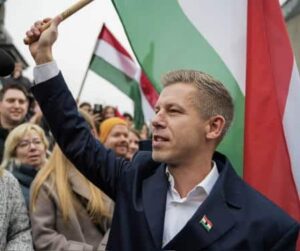
Hungary has entered a new political chapter as Viktor Orbán’s 16-year rule came to an abrupt end following a decisive electoral victory by Péter Magyar, a 45-year-old former insider turned reformist challenger. With more than 98% of votes counted, Magyar’s Tisza party is projected to secure 138 seats in the 199-member parliament—well above the two-thirds majority required to enact constitutional changes. Orbán’s Fidesz party trails far behind with 55 seats, while the far-right Our Homeland party is set to take six.
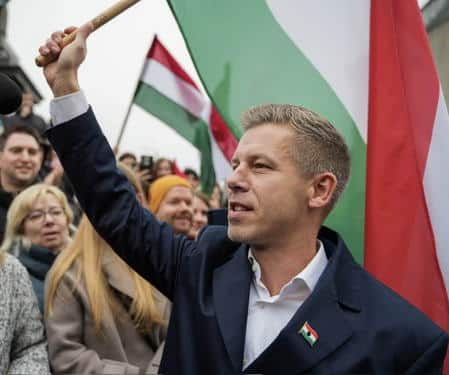
Addressing jubilant supporters along the Danube in Budapest, Magyar declared the result a historic turning point. “Together we overthrew the regime,” he said, as crowds celebrated what many described as a political transformation unprecedented in modern Hungarian democracy. Voter turnout reached a record 79.5%, underlining the scale of public engagement in an election widely viewed as a referendum on Orbán’s leadership.
Orbán, who conceded defeat early, acknowledged the outcome as “clear and painful,” thanking his core supporters while calling for unity in the days ahead. Despite the loss, he has not stepped down as leader of Fidesz and is expected to remain in a caretaker role during the transition.
Magyar’s campaign capitalised on growing dissatisfaction with what critics have long described as systemic corruption, cronyism, and democratic backsliding under Orbán. Over the past two years, he built momentum through an intensive grassroots campaign, drawing large crowds across cities and rural areas alike. His message resonated with a broad coalition of voters, including some former Orbán supporters seeking political renewal.
Central to Magyar’s platform are pledges to restore judicial independence, overhaul healthcare and education systems, and dismantle the entrenched patronage networks known as NER, which critics say benefited political loyalists at the expense of public resources.
The election result is also expected to reshape Hungary’s foreign policy. Orbán had cultivated close ties with Russia’s Vladimir Putin and maintained a contentious relationship with the European Union, often blocking joint initiatives, including support for Ukraine. In contrast, Magyar has pledged to strengthen ties with Brussels and Kyiv, and to distance Hungary from Moscow.
European leaders were quick to respond. Poland’s Prime Minister Donald Tusk welcomed the result, describing it as a “glorious victory,” while signalling a renewed partnership between Warsaw and Budapest. Magyar confirmed that his first official visits abroad would include Poland and the EU institutions in Brussels, where he aims to unlock billions in frozen funds tied to rule-of-law concerns.
Celebrations swept across Budapest on election night, with crowds filling the streets, waving national flags and marking the end of an era. Yet beneath the jubilation lies uncertainty. Magyar, once aligned with Orbán, remains a complex figure for some voters. “We cannot be entirely sure of him,” one supporter noted, “but we need to believe in the possibility of something better.”
As Hungary transitions away from a long-dominant political order, the scale of Magyar’s mandate suggests not just a change in leadership, but a profound redefinition of the country’s domestic and international trajectory.
(Associated Medias) – all rights reserved
L’articolo Hungary Turns the Page: Péter Magyar’s Landslide Ends Orbán Era proviene da Associated Medias.